Real Quantity Surveying questions and answers for civil engineers, explained in a simple way to help you understand core concepts like estimation, costing, contracts, BOQ, valuation, and project management for interviews.
1. Can you explain the tender procedure?
The tender procedure is the formal process through which a client invites contractors to submit competitive bids for a construction project.
Steps in Tendering Process
- Preparation of tender documents, such as Drawings, Specifications, BOQ, and Contract conditions
- Issue of Notice Inviting Tender (NIT)
- Site visit by contractors to assess the site condition to understand ground conditions
- prepare their bid — studying drawings, analysing rates, adding overheads and profit, and submit sealed bids before the deadline.
- The Client’s tem open bids publicly and select L1 (Lowest Bidder)
- After negotiation and clarification, issue a Letter of Appoitment
- Signing of a formal contract agreement
2. What is valuation?
Valuation is the process of assessing the monetary value of work completed at a specific stage of the project.
A QS prepares valuations periodically (usually monthly) by measuring work against the BOQ, applying contract rates, and deducting retention money. The result is an Interim Payment Certificate (IPC) submitted to the employer for payment.
3. What is FIDIC?
FIDIC stands for Fédération Internationale des Ingénieurs-Conseils, and it provides international standard contract conditions.
FIDIC contracts are color-coded books:
| Book Color/Name | Use Case |
| Red Book | Construction works |
| Yellow Book | Design & Build |
| Silver Book | EPC/ Turnkey Projects |
| Green Book | Sort Form of Contract |
| Gold Book | Design, Build & Operate (DBO) |
4. What are the conditions of contracts?
Conditions of contract define the rights, obligations, and responsibilities of all parties.
Types of contract
General Conditions of Contract (GCC) – the standard clauses applicable to most projects (payment, variations, defects liability, dispute resolution)
Special/Particular Conditions of Contract (SCC/PCC) — project-specific amendments that modify or supplement the GCC.
5. What is a breach of contract?
A breach of contract occurs when a contractual obligation is not fulfilled.
Breaches are classified into two categories:
Material Breach – serious enough to allow the other party to terminate the contract.
Minor Breach – which may only entitle the aggrieved party to damages.
6. What is BOQ?
A Bill of Quantities (BOQ) is a document listing all work items with quantities and units.
Structure – Item Description | Unit | Quantity | Rate | Amount
The purpose of BOQ is tendering, valuation and checking final accounts.
7. What is reconciliation?
Reconciliation in quantity surveying refers to the process of comparing and matching records to ensure consistency and accuracy.
Types of reconciliation:
Material reconciliation
Comparing materials issued to the site against materials consumed in the work, to identify wastage, pilferage, or excess usage. For example, comparing the theoretical steel required per the BOQ versus the actual steel consumed.
Financial reconciliation
Comparing the certified payment amounts, variations, and adjustments with the contractor’s running account to ensure both parties’ records agree before the final account is settled.
8. What is arbitration?
Arbitration is a legal dispute resolution method outside the court. A neutral third party called the arbitrator, whose decision (called an award) is legally binding on both parties. It is faster and less formal than litigation in court.
9. What are the stages involved in arbitration?
- Notice of Arbitration
- Appointment of Arbitrator
- Statement of Claim
- Statement of Defence
- Hearing
- Award
- Enforcement
10. What are construction laws?
Construction laws vary from country to country. In India, key legislation includes: Indian Contract Act 1872, Arbitration & Conciliation Act 1996, RERA 2016, BOCW Act 1996, National Building Code (NBC) 2016.
The National Building Code (NBC) 2016 governs structural design, fire safety, and construction practices. RERA protects home buyers and regulates real estate projects. The BOCW Act protects construction workers’ welfare and safety.
11. What is variation?, it
A variation is any alteration to the original scope of work as defined in the contract documents — an addition, omission, or substitution of work.
12. What do you see as key challenges faced by quantity surveyors on a day-to-day basis?
From my experience, the key challenges are: Scope changes, payment delays, market price fluctuations, poor design coordination, stake holder management.
13. Being a civil engineer, why did you choose this field?
I chose quantity surveying because it sits at the intersection of technical knowledge and financial management. It focuses on Cost management, contracts, project economics.
14. What is the productivity of different workforces?
Productivity in construction refers to the output of a worker per unit time, usually per day. Standard productivity figures used in India (as per CPWD and IS 7272):
| Type of work | Output |
| Mason (brickwork) | 1.0–1.5 m²/day |
| Mason (plastering) | 10–12 m²/day |
| Bar Bender (steel) | 200–250 kg/day |
| Carpenter (formwork) | 3–5 m²/day |
| Painter (distemper) | 25–30 m²/day |
| Tile Layer | 8–12 m²/day |
| Excavation (manual) | 2.5–3 m³/day |
15. What square meters of brickwork can a mason do in a day?
As per IS 7272, a skilled mason can lay Half brickwork – 1-15 m²/day, Full brick wall – 0.75 – 1 m²/day
16. What is quantity surveying?
Quantity surveying is the professional field focused on measuring, managing, and controlling the financial aspects of construction projects. A quantity surveyor (QS) is engaged throughout the project lifecycle from the pre-design stage to the final account, to ensure the project is delivered within budget and that all financial matters are handled accurately, fairly and transparently.
17. What is estimation and costing?
Estimation is the process of forecasting the probable cost of a construction project before it is built, based on available information.
Costing, on the other hand, is the process of calculating the actual cost incurred during or after construction.
18. What are the types of contracts?
There are several types of contracts, such as Lump sum, Item rate, Cost plus, EPC, PPP, Labour only, and BOT contracts.
Among these, the most commonly used in civil construction are ITEM Rate (public sector) and Lump Sum (private sector). EPC contracts are widely used for large infrastructure projects like highways and power plants.
19. How much is concrete wastage?
Typical Concrete wastage allowances considered in the estimation are:
| RCC Beams, columns, slabs | 2 – 3% |
| Foundation | 3 – 5% |
| Mass concrete | 5 – 10% |
| Ready Mix Concrete | 1 – 2% |
| Site Mixed concrete | 3 – 5 |
20. What is productivity?
Productivity in construction is the ratio of output produced to the resources (labour, equipment, materials) consumed to produce that output. Usually, it is measured in the quantity of work completed per unit of input, for example, work done per day or hour.
21. Calculation of concrete reinforcement quantities in a structure
Reinforcement quantity is calculated by finding the total weight of steel used in different structural members. The standar formula is: Weight (kg) = (d² / 162) × Length (m)
Where d is the diameter of the bar in mm. This formula is derived from the density of steel (7850 kg/m³) and gives weight in kg per metre for a given dia bar.
22. What is the development length, and what should it be in the case of a beam?
Development length (Ld) is the minimum length of bar that must be embedded beyond a critical section in order to develop the full tensile or compressive strength of the bar through bond with the surrounding concrete. If this length is not provided, the bar may slip, leading to structural failure.
As per IS 456:2000, development length is given by: Ld = (φ × σs) / (4 × τbd)
Where φ = bar diameter, σs = stress in bar (0.87 fy for tension), τbd = design bond stress.
For a beam, the bottom bars at a simply supported end must have a development length measured from the face of the support into the support. Typically the anchorage length of 16φ to 47φ is provided depending on steel grade and concrete grade.
23. What are the measuring units of plastering, woodwork, and excavation?
| Item of work | Unit of measurement |
| Plastering | Square metre (m²) |
| Woodwork – Doors/windows | Cubic metre (m³) |
| Woodwork – Shutter/panels | Square metre (m²) |
| Excavation | Cubic metre (m³) |
24. Different diameters of reinforcement available in the market
Standard diameters of TMT bars:6 mm, 8 mm, 10 mm,12 mm, 16 mm, 20 mm, 25 mm, 28 mm, 32 mm, 36 mm, 40 mm (6mm to 40mm)
25. What is Fe-500D?
Fe-500D is a grade of TMT reinforcing steel bar as per IS 1786. “Fe” stands for iron (ferrum), “500” denotes the minimum yield strength of 500 N/mm² (MPa), and “D” stands for Ductile — indicating superior ductility properties. Best suited for Seismic zones, high-rise buildings
26. What is the capacity of a transit mixer?
The standard size of a transit mixer is 6 m³, and a large transit mixer is 7 m³ to 9 m³. The concrete must be discharged within 90 minutes or 300 revolutions of the drum (as per IS 4926) to prevent slump loss and initial setting.
27. What is the estimation of the interior work of the room you’re sitting in?
Assuming a standard 4m × 5m × 3m room (L × W × H):
| Item | Approximate Qty |
| Floor area (flooring/tiling) | 20 m² |
| Wall plastering (4 walls) | ~48 m² (net of door/windows) |
| Ceiling plastering/POP | 20 m² |
| Painting (2 coats) | ~68 m² (walls + ceiling) |
| Door (1 no, 1m × 2.1m) | 1 no. = 2.1 m² |
| Window (2 no, 1.2m × 1.2m) | 2 no. = 2.88 m² |
| Skirting (100mm ht) | ~18 Rm |
Breaking the room into its components and applying knowledge of measurement units to each. Rough cost at current rates (India): approximately ₹80,000–₹1,20,000 depending on finish specification.
28. How can you define quantity surveying and cost management?
Quantity surveying is the technical discipline of measuring, describing, and pricing construction works. It is fundamentally rooted in the physical quantities of materials and labour required to build something.
Cost management is a broader strategic function that encompasses budgeting, cost planning, procurement strategy, value engineering, cash flow forecasting, cost monitoring during construction, and final account settlement — it uses quantity surveying as its input but operates at the project and business level.
29. What are the development length and the lap length?
Development length (Ld) is the embedment length required for a bar to develop its full design stress through bond. It is used at the ends of bars, at supports, and at any critical section.
Lap length is the overlap provided when two bars are joined end-to-end to transfer stress from one bar to another.
30. What is the overlap length for columns, beams, and slabs?
| Structural Member | Overlap length |
| Column | 45φ to 60φ |
| Beams | 45φ to 60φ |
| Slabs | 40φ to 50φ |
Laps in columns are typically provided just above floor level or at 1/3 height, never at beam-column junctions. Not more than 50% of bars should be lapped at the same cross-section as per IS 456.
31. What is the clear cover of the beam, slab, and column?
Clear cover is the minimum distance between the outermost surface of reinforcement and the outer face of the concrete. It protects the steel from corrosion and fire. As per IS 456:2000 (Table 16):
| Member | Mild Exposure | Moderate Exposure |
| Slab | 20 mm | 30 mm |
| Beam | 25 mm | 35 mm |
| Column | 40 mm | 45 mm |
| Footing | 50 mm | 50 mm |
In practice, 25 mm for slabs, 25–30 mm for beams, and 40 mm for columns is the most commonly specified in standard RCC buildings in India.
32. Rate analysis and negotiation
Rate analysis is the process of determining the unit cost (rate) for an item of work by analysing its components: materials, labour, plant, and overheads plus the contractor’s profit. It is the backbone of BOQ pricing.
Negotiation is the commercial conversation between the QS/client and the contractor to agree on rates for new items not in the BOQ (variation items), finalising contract sum, or resolving rate disputes.
33. Deduction in brickwork and formwork
When measuring brickwork, deductions are made for openings (doors, windows, ventilators) and for spaces occupied by RCC members (columns, beams, lintels). As per IS 1200 Part 3:
Opening > 0.1 m² – Full deduction
Opening ≤ 0.1 m² – No deduction (ignored)
Door/window frames – No deduction for frame volume (small)
RCC bands, lintels – Deducted from brickwork volume
34. Amount of binding wire per ton of steel
The standard thumb rule for binding wire consumption is 8 to 12 kg of binding wire per metric ton (MT) of reinforcement steel.
35. What are the sizes of brick and block?
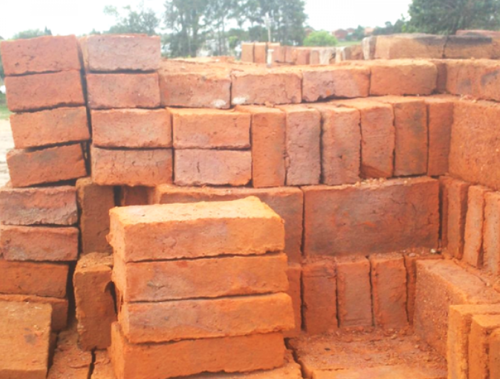
The standard clay brick size is 190×90×90 mm with 10 mm mortar joints. AAC blocks (600×200mm face) are increasingly popular due to their light weight and provide better thermal insulation.
36. What is cost analysis, estimation, and budget?
Estimation is the forecasting of the project cost before construction using drawings and the market rate.
Budget is the approved maximum amount allocated for the project.
Cost analysis is breaking down costs to understand spending and find savings.
37. IS (Indian Standards) codes of different items
| IS Code | Subject |
| IS 456:2000 | Plain & Reinforced Concrete |
| IS 1786:2008 | High Strength Deformed Steel Bars (TMT) — IS 1786 |
| IS 1200 | Method of Measurement of Building Works (Parts 1–28) |
| IS 7272 | Recommendations for Labour Output Constants |
| IS 1077:1992 | Common Burnt Clay Building Bricks |
| NBC 2016 | National Building Code of India |