
What is Slump :-
It can be defined as difference between height of the concrete before removing slump cone (mould) and height of the concrete after removing of slump cone as measured during concrete slump test.

Procedure to measure slump
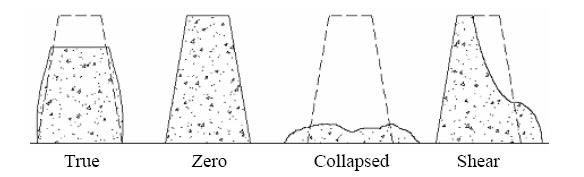
- Collapse slump : In this case, fresh concrete collapses completely. Mix is too wet or high workability mix , slump test isn’t appropriate for such mix.
- Shear Slump: If one-half of the cone slides down in an inclined plane, it is called a shear slump. It is an indication of lack of cohesion of the mix. Again perform the experiment to avoid shear slump .
- True Slump: Mix has high stiff consistency. In a true slump concrete just subsides shortly and more or less maintain the mould shape. This type of slump is most desirable.
- Zero Slump: If concrete maintains the actual shape of the mould, it is called zero slump which represents stiff, consistent and almost no workability.
Slump value for various type of construction:
As per ACI: 211.1-19

As per Indian Standard Code 456
The Slump Value depends upon the placing condition (Type of Structure) and the values are given below:

Watch Technical video’s related to civil engineering on our YouTube channel We Civil Engineers

I like your explaination for civil engineering. This makes me to continue performing well in the construction laboratory when testing fresh concrete and other related laboratory tests. As a Construction Laboratory Technician has been learning and improving my skills and exprience through your simplified notes as shown.